Commercial Waste in Farnborough for straightforward business collections
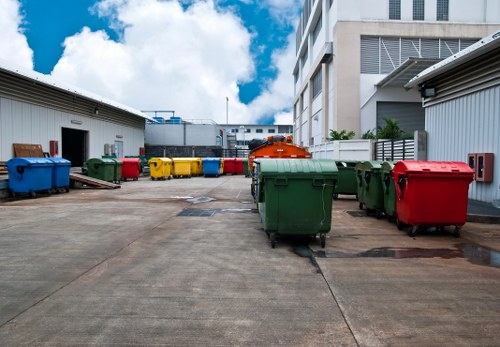
Commercial waste in Farnborough needs a practical approach, especially when a workplace wants regular collections, a one-off clear-out or help with mixed office and trade materials. We provide a service focused on lifting, sorting and removing business waste responsibly, with options that suit offices, shops, warehouses and other commercial premises. The aim is simple: keep working areas clear, keep disposal manageable and make the process easy to organise around your normal operations.
Our business waste removal service covers recurring and occasional collections for premises that produce general commercial rubbish, packaging, office contents and similar non-hazardous materials. Where a business needs a more flexible arrangement for a larger clear-up, the service can also be shaped around workload, access and the type of waste involved. If you are comparing ways to clear accumulated materials, waste removal is the broad starting point for understanding the options available through the site.
For offices and professional settings, a tidy disposal plan often matters as much as the collection itself. Paper, archive boxes, broken furniture and redundant fixtures can build up quickly, and they usually need separating before removal. Our approach is to deal with the load in a sensible way, so items are collected, sorted where relevant and taken away without creating extra disruption. If you are ready to discuss the job, contact us for a quotation.
Business waste collections arranged around your premises
Commercial waste work often starts with the practical question of what type of material is present and how it is stored. Some premises mainly need uplift of bagged general waste, while others have stacked boxes, worn fittings, shelves or mixed leftover stock. The right collection method depends on access, lifting requirements and whether the waste is neatly contained or spread across several areas. A clear description of the load helps us plan the work accurately and avoid unnecessary handling on site.
For companies looking for a dependable routine, collections can be organised to suit the rhythms of the premises rather than forcing a one-size-fits-all setup. office clearance is especially useful where furniture, filing and everyday waste all need removing together, while confidential shredding supports disposal of sensitive paperwork that should not simply go into general waste. Where you need a clearer view of charges before making a decision, pricing and quotes gives a route to request more detail.
In practice, the most efficient jobs are those where the waste has been grouped by type and kept accessible for loading. That does not mean everything has to be sorted in advance, but separating obvious items such as cardboard, office furniture, fixtures and breakables can make the collection more straightforward. It also helps us judge whether the work is a routine uplift, a partial clearance or a more involved removal with heavier items.
Office and workplace clearances
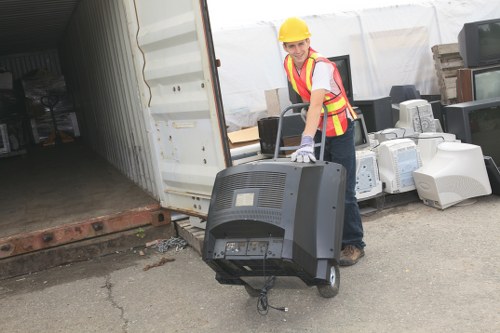
Office and workplace clearances usually involve more than just bagged rubbish. Desks, chairs, storage units, monitors, small appliances and archive materials may all be present in the same building, and each type of item needs handling in the right order. A sensible clearance plan begins with the heavier furnishings and then moves through lighter items, loose contents and leftover waste so that circulation space is opened up steadily rather than all at once. That makes the removal easier to manage in active premises.
Where a business has outgrown a room layout, changed use of a floor or closed off a storage area, clearance work can help return the space to a usable condition. furniture clearance is useful for desks, cabinets and other office pieces that no longer suit the set-up, while furniture disposal suits items that have reached the end of their usable life. For larger or more varied locations, home clearance and house clearance are listed separately on the site, but the commercial work here remains focused on business premises.
When a workplace is preparing for a refit or relocation, it is often worth thinking about what should be kept, what can be re-used and what should be removed in one visit. That simple decision-making step can reduce double-handling and keep the job more organised. Clear pathways, grouped items and a note of any awkward access are usually enough to get the work moving in the right order, without needing a long checklist. If the building includes shared access, loading restrictions or specific collection times, mention those details early. Request a quotation when you are ready.
Waste types we can handle for business customers
Commercial waste is often varied rather than uniform, so it helps to understand the common categories before arranging collection. Some loads are mostly recyclable cardboard and packaging, while others contain old furniture, broken fixtures, appliances or mixed general rubbish from a clear-out. The more accurately the material is described, the easier it is to plan the right vehicle space, lifting method and disposal route. This is particularly useful where waste has accumulated over time and no longer fits a single neat category.
For businesses with specific item types, the site includes dedicated pages that may be relevant to the load. mattress and sofa disposal is aimed at bulky upholstered items, fridge and appliance removal covers larger electrical units, and hazardous waste disposal is the place to review specialist handling requirements before assuming an item can go with standard commercial rubbish. These pages help separate different waste streams so the main collection can be arranged more accurately.
It is also sensible to distinguish between what is general office waste and what may need special treatment because of size, weight or contents. For example, a room full of paper and packaging is a very different job from a storeroom with damaged equipment, shelving and awkwardly placed fittings. A concise summary of the materials is usually enough at the quotation stage, especially if the load includes both light and heavy items. A short note about whether anything is fragile, fixed or difficult to carry is often helpful.
How the collection process usually works
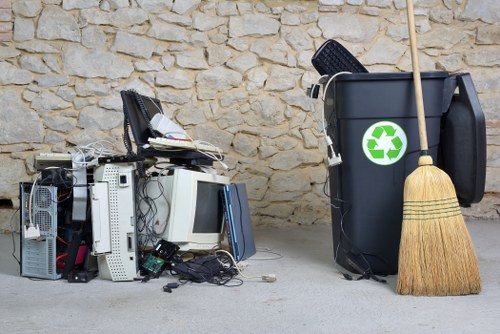
Most commercial collections work best when the process is kept direct. You identify the waste, explain the site layout and agree what needs removing, then the clearance is carried out in a way that fits the available access. For businesses, that may mean a tidy uplift from a rear yard, a collection from an office floor or the removal of stacked items from a storage room. The key is to match the work to the premises rather than force the premises to suit the work.
Some customers like to group the waste by room or by item type before the collection, while others simply want the load taken as it stands. Either approach can work, but a little preparation usually makes the visit smoother. If you are comparing service choices, garage clearance and loft clearance show how different spaces can be cleared in a controlled way, and builders waste clearance is useful where the commercial load includes renovation debris rather than just office items. The main point is to choose the page that fits the material most closely.
- Group similar items where practical, such as cardboard, furniture and mixed rubbish.
- Make access to the collection point as clear as possible.
- Note any lifts, narrow corridors, stairways or loading limits.
- Separate anything that may need specialist treatment from general waste.
Bulky items, fixtures and mixed loads
Commercial premises often generate bulky items that are harder to move than bagged waste alone. Filing cabinets, desks, shelving, reception furniture and equipment housings can all slow a clearance if they are not planned for properly. That is why bulkier loads are best considered in relation to the access available and the weight of each piece. A mixed job may need a careful sequence: larger items first, then the smaller contents and final sweep of loose waste.
Where the load includes combined office and household-style contents from a business tenancy, a broad clear-out may be more suitable than a narrow waste uplift. The site’s flat clearance and furniture clearance pages can help show how different categories are handled, while about us gives a general introduction to the wider company information available on the website. For a commercial customer, though, the most important decision is usually whether the waste is mostly lightweight, bulky, recyclable or a mixture of all three.
In some premises, the most awkward part of the job is not the waste itself but how it is positioned. Items may be stacked behind stock, placed in a locked storage area or mixed in with equipment that must remain on site. Clear instructions about what is staying and what is going can prevent mistakes and make the collection more efficient. If you already know that a space contains heavier pieces, mention them when asking for a quotation rather than waiting until the visit.
Office closures, refurbishments and end-of-tenancy clearances
When a business is closing a unit, changing tenant or refurbishing a work area, commercial waste often turns into a larger clearance task. The aim is no longer to empty a single bin store but to remove furniture, loose contents and accumulated rubbish in a planned order. A clear-out of this type may include desks, cupboards, shelving, packaging, broken small items and the normal waste that has built up during occupation. The job is usually easiest when the remaining fixtures are identified separately from the items to be taken away.
Where the work is tied to a change in use, it may help to think in terms of zones. Reception, workstations, stock rooms and storage areas often contain different materials, so they should be described separately if possible. business waste removal remains the core service for commercial customers, while office clearance is the more specific option if the job is dominated by workplace furniture and paperwork. If you also need to understand what the business does about responsible handling, recycling and sustainability sets out that subject in one place.
A practical brief saves time. A short note about the rooms involved, the items to stay and the main access points is often enough for a quotation request. If there are stairs, service lifts, yard gates or timed building rules, include them in the same message so the collection can be planned against the real conditions on site. That sort of preparation is far more useful than a long description, and it keeps the focus on the work that needs to be done.
Pricing, access and quotation details

Commercial waste prices usually depend on the nature of the materials, the amount to be removed and the access available at the property. Heavier items, awkward loading points and mixed materials can all affect the time needed and the disposal route chosen. That is why a clear quotation request should include the type of waste, the approximate amount and anything that might make the collection more complex than a straightforward uplift.
For some businesses, the best way to keep costs under control is to divide the work into parts. A storeroom clear-out, for example, may be separated from a routine waste collection if the contents are bulky or unevenly mixed. If you need to review what can and cannot be put together, what can go in a skip can help with general waste-sorting considerations, even when a skip is not the final choice. If the item list includes confidential or potentially sensitive materials, it is better to raise that early rather than assume ordinary disposal will be suitable.
Useful quotation details usually include the site type, the main waste categories, any especially heavy pieces and the best time for access. You do not need to write a long report; just enough information to describe the job accurately. If photographs are available, they can help illustrate the volume and layout, but a clear written summary is equally valuable. A sensible request is often the quickest route to an accurate response, so keep the description honest and specific.
Responsible handling and disposal options
Responsible commercial waste handling starts with separating materials that can be sent for different treatment routes. Cardboard, metals, clean office furniture, electrical items and general rubbish are not all handled in the same way, so a good removal plan pays attention to the contents before loading begins. That does not mean every item needs to be sorted on site, but it does mean the collection should be organised with disposal in mind rather than treated as a single undifferentiated pile.
For businesses that want to understand the broader disposal process, recycling and sustainability provides a useful overview of how waste handling is approached on the site. insurance and safety is also relevant where customers want to review the general approach to managing work carefully, while health and safety policy covers the policy side of safe working. These pages do not replace the quotation process, but they help explain the context for the service.
Practical disposal also means recognising when an item is not suitable for the standard route. That is why specialist pages exist for certain categories, rather than trying to squeeze every waste type into one description. If the material is unusual, bulky or potentially restricted, name it clearly when making the enquiry. Accuracy at the start makes the collection simpler to organise and helps avoid avoidable delays later in the process.
About Farnborough
Farnborough is a town in the northwest of Hampshire, closely associated with aviation, military history and twentieth-century technical development. Its identity was shaped in part by the Royal Aircraft Establishment and by the long-running presence of air-related research and industry, with the town becoming widely known for the Farnborough International Airshow. The area sits within the Borough of Rushmoor and has grown from earlier settlement patterns into a busy urban centre with residential districts, business premises and transport links that connect it to nearby towns in north-east Hampshire and Surrey. Farnborough railway station provides rail services on the South Western Railway network, helping to tie the town to the wider commuter and business geography of the region.
Commercial waste services for ongoing and one-off needs

Some businesses need a repeated uplift pattern, while others only require a single clear-out after a move, refit or stock change. Both arrangements can sit under commercial waste removal, provided the job is described clearly. A regular collection usually suits premises that produce a steady amount of mixed waste, whereas a one-off service is often better for accumulated items, office changes or the end of a tenancy. The right choice depends on the volume, the type of material and how quickly the space needs to be cleared.
Where a business wants to compare related options, garden clearance may be useful for premises with outdoor areas, while fridge and appliance removal applies where electrical units need separate handling. The quotation route on the website is the simplest way to set out what is required, especially if the waste spans more than one category. If you are at the stage of narrowing the options, you can ask for guidance and then choose the collection that best matches the site and materials.
Tell us what needs removing, where it is stored and when access is easiest, and we can help organise the right commercial collection. If you are ready to move forward, contact us for a quotation.